
Abdominal compartment syndrome: measure pressure, protect organs
A practical, evidence-based surgical review
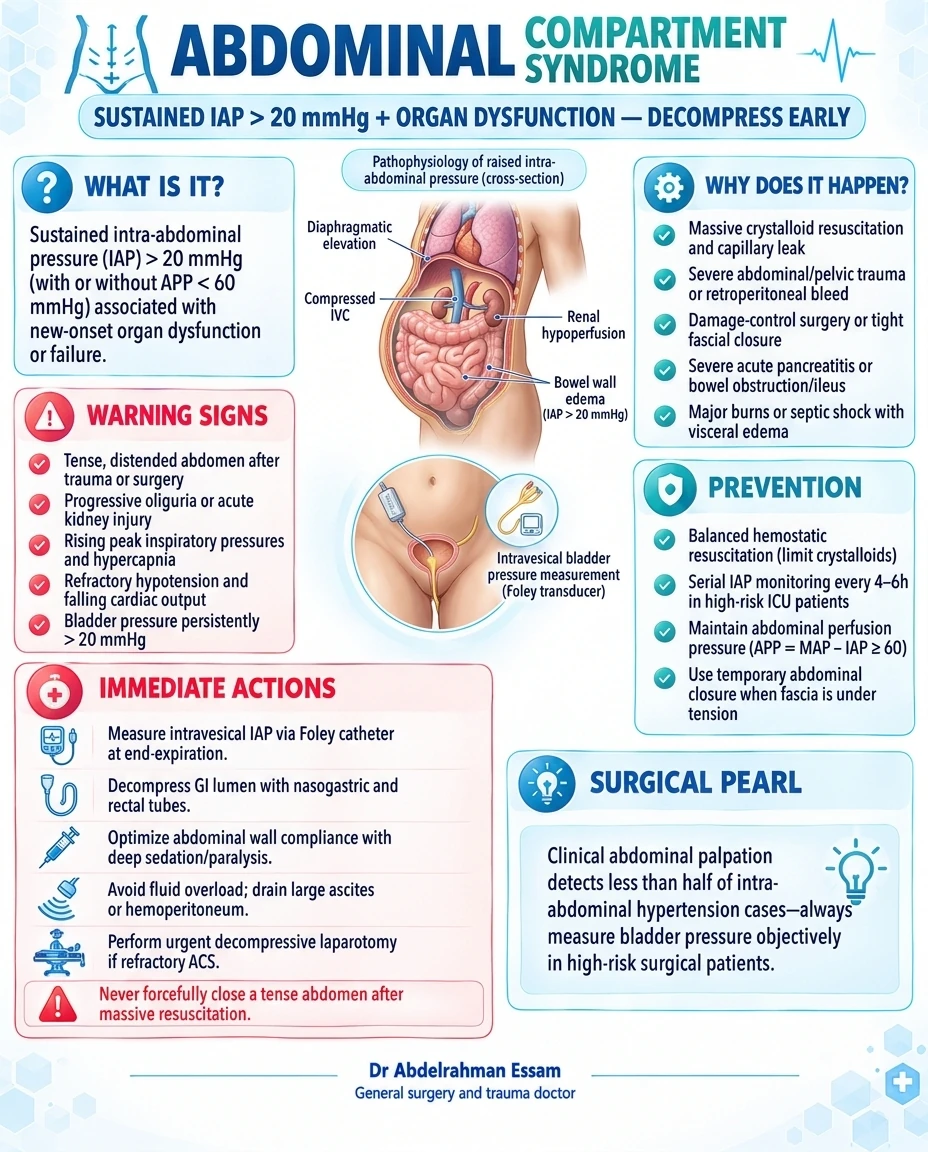
A tense abdomen is a clue, not a measurement. Sustained pressure elevation with new organ dysfunction requires urgent action.
Use the definitions precisely
In adults, intra-abdominal hypertension is sustained or repeated intra-abdominal pressure of at least 12 mmHg. Abdominal compartment syndrome is sustained pressure above 20 mmHg associated with new organ dysfunction or failure.
Pressure alone does not define ACS, and an apparently soft abdomen does not exclude clinically important pressure elevation. [1]
Recognize the risk setting
Major trauma, substantial resuscitation, capillary leak, ileus, abdominal collections, and reduced abdominal-wall compliance can raise pressure. Oliguria, impaired ventilation, and circulatory deterioration may follow, but these findings have other causes too.
The important step is to consider IAH and measure it when risk and physiology fit. [1]
Measure consistently
The standard intermittent reference method is bladder pressure measurement with a small instillation volume, no more than 25 mL in adults. Measurements should be made at end-expiration in the supine position, with abdominal muscle contraction absent and the transducer zeroed appropriately at the mid-axillary line.
Document technique and trends so serial values are comparable. [1]
Treat the causes and the consequences
Analgesia, sedation, gastrointestinal decompression, drainage of suitable fluid collections, and avoiding unnecessary positive fluid balance after initial resuscitation can be part of treatment. Selected patients may benefit from a brief trial of neuromuscular blockade.
Overt ACS warrants urgent surgical assessment for decompression; progressive organ failure must not be left waiting through prolonged ineffective medical measures. [1]
Keep prevention evidence in proportion
Temporary abdominal closure and later safe fascial closure may be needed. The 2013 WSACS update could not recommend routine abdominal-perfusion-pressure monitoring as a treatment target, so an APP threshold should not be presented as a universally proven endpoint.
Pressure, organ function, and the whole resuscitation picture must be assessed together. [1]
Practical Surgical Pearls
- Trend pressure and organ function using a consistent measurement method.
Common Pitfalls
- Diagnosing or excluding ACS by palpation alone.
- Treating an isolated pressure value without its physiological context.
Key Takeaways
- Early measurement and timely cause-specific treatment help prevent delayed recognition.
Educational content for healthcare learners and professionals, not individualized medical advice. Sources checked 22 November 2026. Recommendations may change; consult the full source and current local guidance. This is an editorial evidence review, not independent clinical peer review.