
Acute cholangitis: recognize sepsis and plan biliary drainage
A practical, evidence-based surgical review
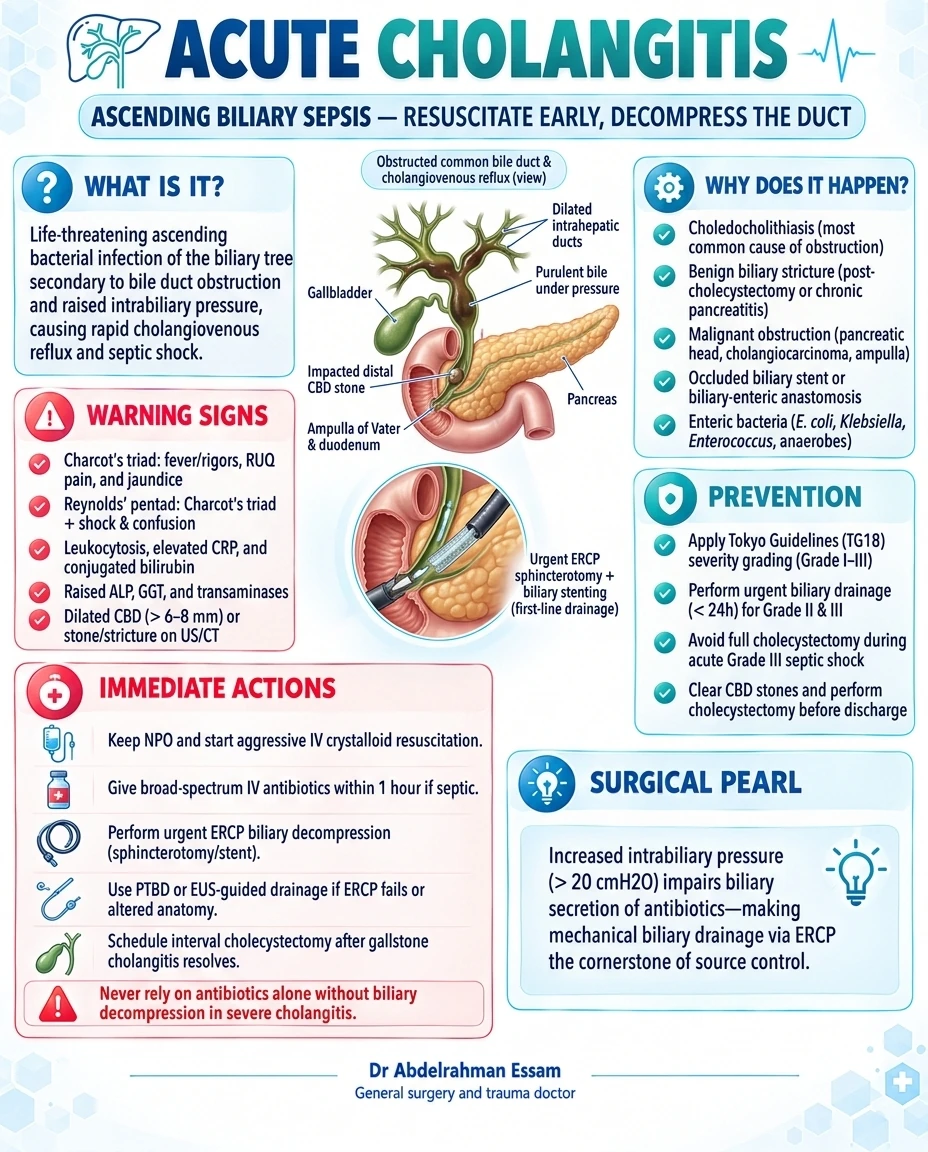
Combine inflammation, cholestasis, and imaging rather than relying on a complete Charcot triad.
The diagnostic framework
Acute cholangitis usually develops when biliary infection occurs in an obstructed system. Stones, strictures, malignancy, and blocked stents are common contexts.
Charcot triad is useful when present, but its absence does not exclude disease. Older or critically ill patients may have incomplete or atypical findings.
[1,2]
Apply the Tokyo approach
The TG18 framework combines systemic inflammation, cholestasis, and imaging evidence of obstruction or its cause. Severity grading then identifies patients with organ dysfunction or other features associated with a more severe course.
These categories guide urgency, but reassessment remains necessary because a patient can worsen after an initially mild classification. [1,2]
Resuscitate and treat infection
Assess perfusion and organ function, obtain cultures when appropriate without delaying treatment, and start suitable empiric antibiotics. The regimen must reflect disease severity, community versus healthcare exposure, prior instrumentation, local resistance, and allergy or organ dysfunction.
Narrow therapy as microbiology becomes available. Routine identical coverage for every patient is not good stewardship. [1]
Drain the obstructed system
ERCP is generally the preferred drainage route when feasible. Moderate disease calls for early drainage, and severe disease requires urgent drainage alongside stabilization and organ support.
In shock, a short decompression procedure may be safer than prolonged attempts at complex stone clearance. Alternative drainage routes are chosen when endoscopic access fails or is unsuitable. [1]
Prevent the next episode
After the acute infection is controlled, the cause must be addressed. Document removal or exchange of temporary stents and plan definitive treatment of stones, strictures, or malignancy.
For suitable patients with gallstone disease, the timing of cholecystectomy should be agreed within the overall biliary-care pathway. Antibiotics alone cannot permanently correct a persistently obstructed duct. [1]
Practical Surgical Pearls
- Severity is dynamic: repeat the organ-function assessment after initial treatment.
Common Pitfalls
- Using the absence of jaundice or the full triad to dismiss cholangitis.
Key Takeaways
- Prompt antibiotics and an appropriate drainage plan are complementary, not competing, treatments.
References
Educational content for healthcare learners and professionals, not individualized medical advice. Sources checked 22 November 2026. Recommendations may change; consult the full source and current local guidance. This is an editorial evidence review, not independent clinical peer review.