
Acute mesenteric ischemia: diagnosis, reperfusion, and bowel preservation
A practical, evidence-based surgical review
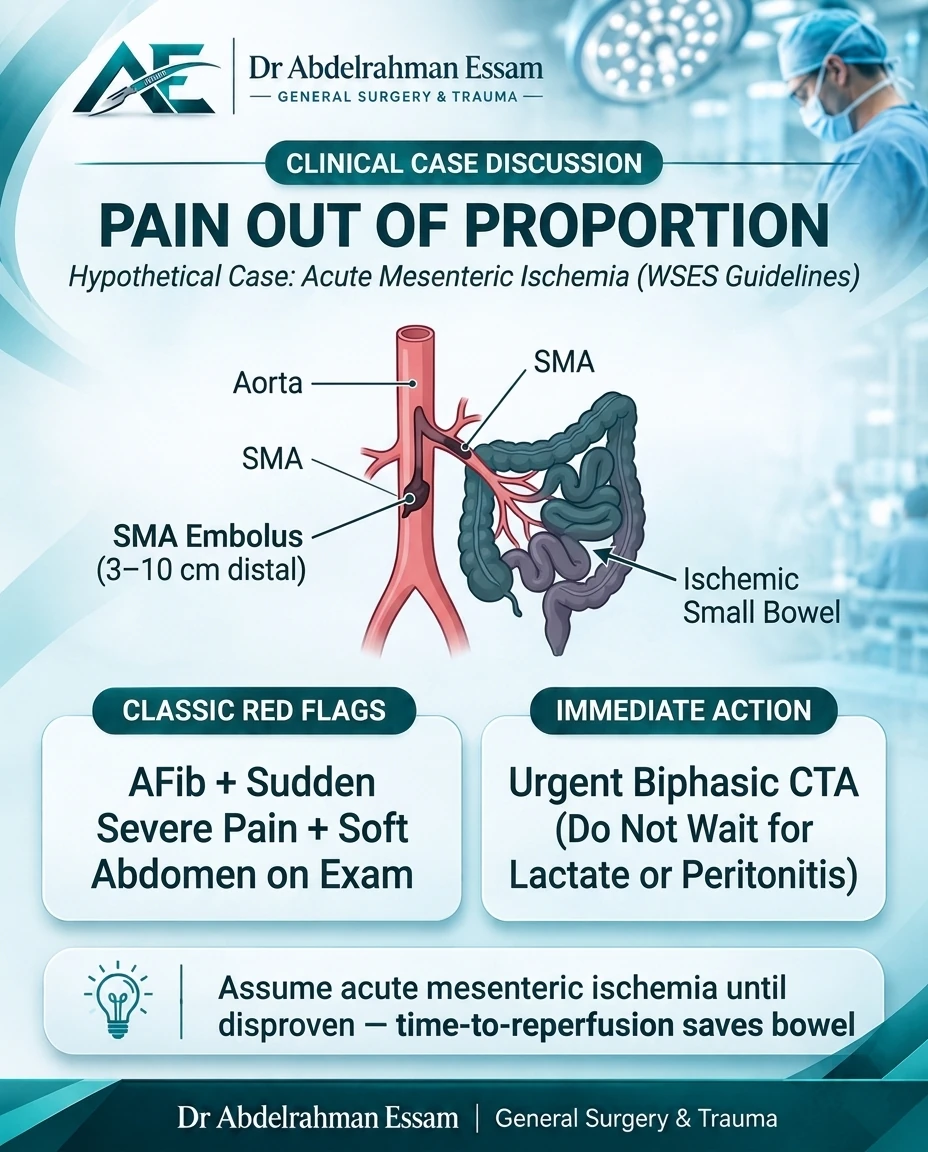
CTA, early specialist involvement, and cause-specific treatment are central. Not every mesenteric ischemia pathway requires the same intervention.
More than one disease
Acute mesenteric ischemia includes arterial embolism, arterial thrombosis, mesenteric venous thrombosis, and non-occlusive ischemia. Their management differs even though all can lead to bowel infarction.
Atrial fibrillation, atherosclerosis, hypercoagulability, and low-flow critical illness are different clinical clues, not interchangeable diagnostic labels. [1]
Diagnose before late signs develop
Severe abdominal pain out of proportion to examination is a classic warning, but presentations vary, especially in critically ill patients. Routine blood tests, including lactate, cannot reliably exclude early ischemia.
WSES recommends urgent CT angiography when AMI is suspected; oral contrast should not delay the study. [1]
Stabilize in parallel with investigation
Restore perfusion with careful resuscitation, monitor electrolytes and acid-base status, and involve surgery and vascular or interventional specialists early. Broad-spectrum antibiotics are recommended because ischemic bowel loses its barrier function.
Anticoagulation is used when appropriate, considering the mechanism and contraindications. Excessive fluid administration and unnecessary vasoconstriction can complicate care. [1]
Match treatment to the mechanism
Arterial occlusion may be treated by endovascular, open, or hybrid revascularization according to anatomy, physiology, and expertise. Mesenteric venous thrombosis without peritonitis is commonly treated initially with anticoagulation.
Non-occlusive ischemia requires correction of the precipitating low-flow state and selective additional treatment. Peritonitis indicates the need for urgent surgical exploration. [1]
Preserve bowel without leaving necrosis
Frankly non-viable bowel requires resection, but borderline viability can be difficult to judge. Reperfusion and reassessment should be coordinated.
Damage-control surgery, temporary closure, and a planned second look, often within 24 to 48 hours when indicated, can help guide further treatment. No rigid waiting period or single visual sign replaces surgical judgment. [1]
Practical Surgical Pearls
- Write down the suspected mechanism because it changes the definitive treatment.
Common Pitfalls
- Using normal lactate or a quiet early examination to rule out AMI.
Key Takeaways
- The priorities are rapid diagnosis, restoration of perfusion where needed, and preservation of viable bowel.
Educational content for healthcare learners and professionals, not individualized medical advice. Sources checked 22 November 2026. Recommendations may change; consult the full source and current local guidance. This is an editorial evidence review, not independent clinical peer review.