
Anastomotic leak: recognize deterioration and secure source control
A practical, evidence-based surgical review
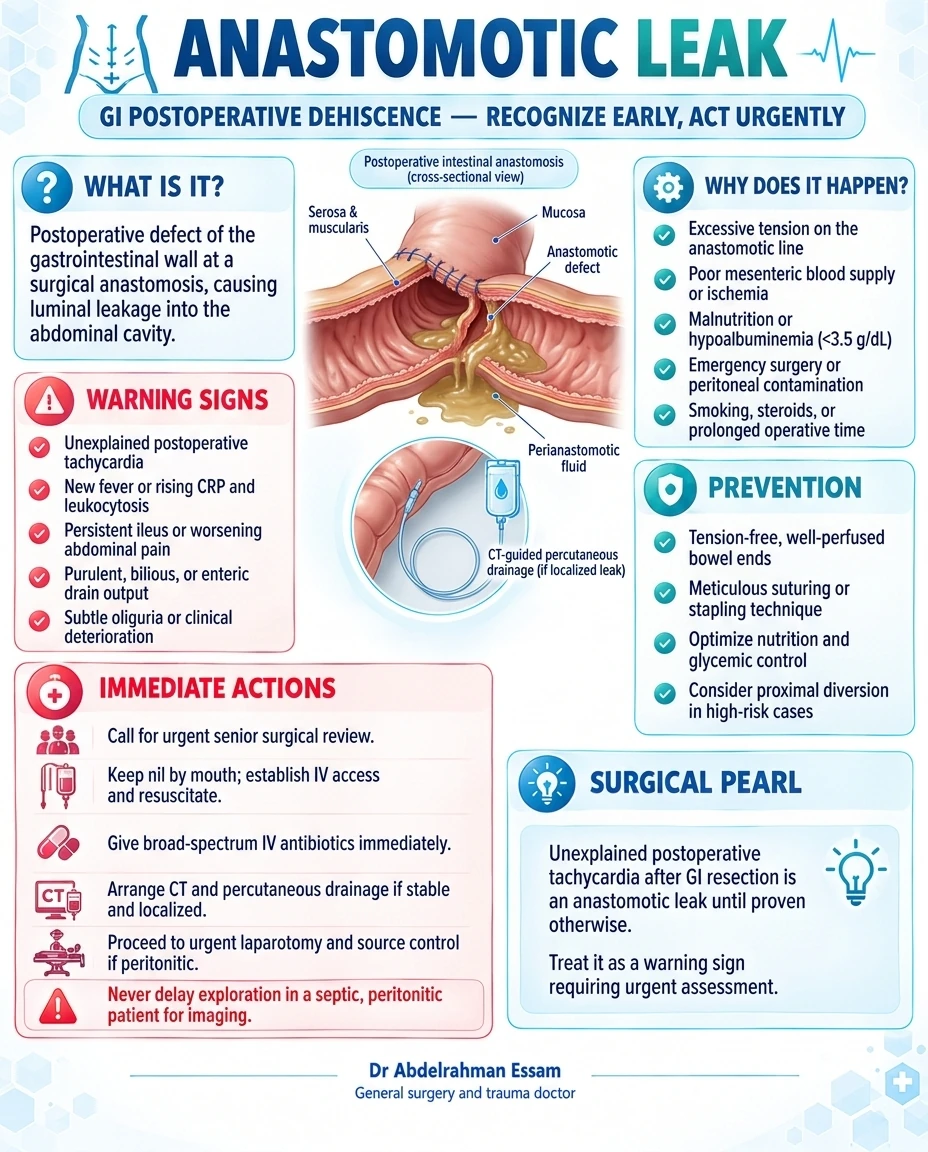
Postoperative tachycardia, ileus, or sepsis requires active reassessment. Management depends on stability, leak anatomy, and contamination.
Recognizing an abnormal recovery
An anastomotic leak is a defect at a surgically created bowel connection that permits communication outside the bowel lumen. Presentation varies from a contained collection to diffuse peritonitis.
New tachycardia, fever, persistent ileus, increasing pain, or abnormal drain output should prompt assessment, but none of these findings alone makes the diagnosis. Leaks can occur beyond the first postoperative week.
[1,2]
Risk is multifactorial
Local perfusion, tension, anastomotic level, operative conditions, and patient factors all matter. Malnutrition, smoking, immunosuppression, and significant comorbidity can increase risk.
Albumin is a risk marker influenced by inflammation as well as nutrition; a low value should not be treated as a stand-alone diagnosis of malnutrition. [1]
Investigate without delaying rescue
Start with senior surgical review, physiology, examination, and relevant laboratory trends. In a stable patient, CT with an appropriate contrast protocol can identify a collection or evidence of leakage.
A negative investigation does not override ongoing clinical deterioration. In instability or generalized peritonitis, urgent source-control decisions must not wait for a perfect radiologic demonstration. [2]
Match treatment to the problem
Antibiotics, bowel rest, and image-guided drainage may be suitable for selected stable patients with a contained leak. Uncontrolled sepsis or diffuse contamination may require surgery, diversion, drainage, revision, or takedown depending on the operative findings.
A protective stoma can reduce the consequences of some distal leaks, but it does not guarantee prevention of the leak itself. [1,2]
Prevention and follow-through
Good perfusion, low tension, careful construction, and patient optimization remain central. No single drain, test, or biomarker can eliminate risk.
Record a follow-up plan for a suspected or confirmed leak and reassess response to source control rather than relying only on a falling inflammatory marker. [1,2]
Practical Surgical Pearls
- Treat a change in postoperative physiology as a reason to reassess the patient directly.
Common Pitfalls
- Calling every episode of postoperative tachycardia a confirmed leak.
- Assuming a drain or diverting stoma makes a leak impossible.
Key Takeaways
- Early recognition matters, but definitive management must be tailored to physiology and anatomy.
References
Educational content for healthcare learners and professionals, not individualized medical advice. Sources checked 22 November 2026. Recommendations may change; consult the full source and current local guidance. This is an editorial evidence review, not independent clinical peer review.