
Antibiotics for uncomplicated appendicitis: what APPAC shows at 10 years
A practical, evidence-based surgical review
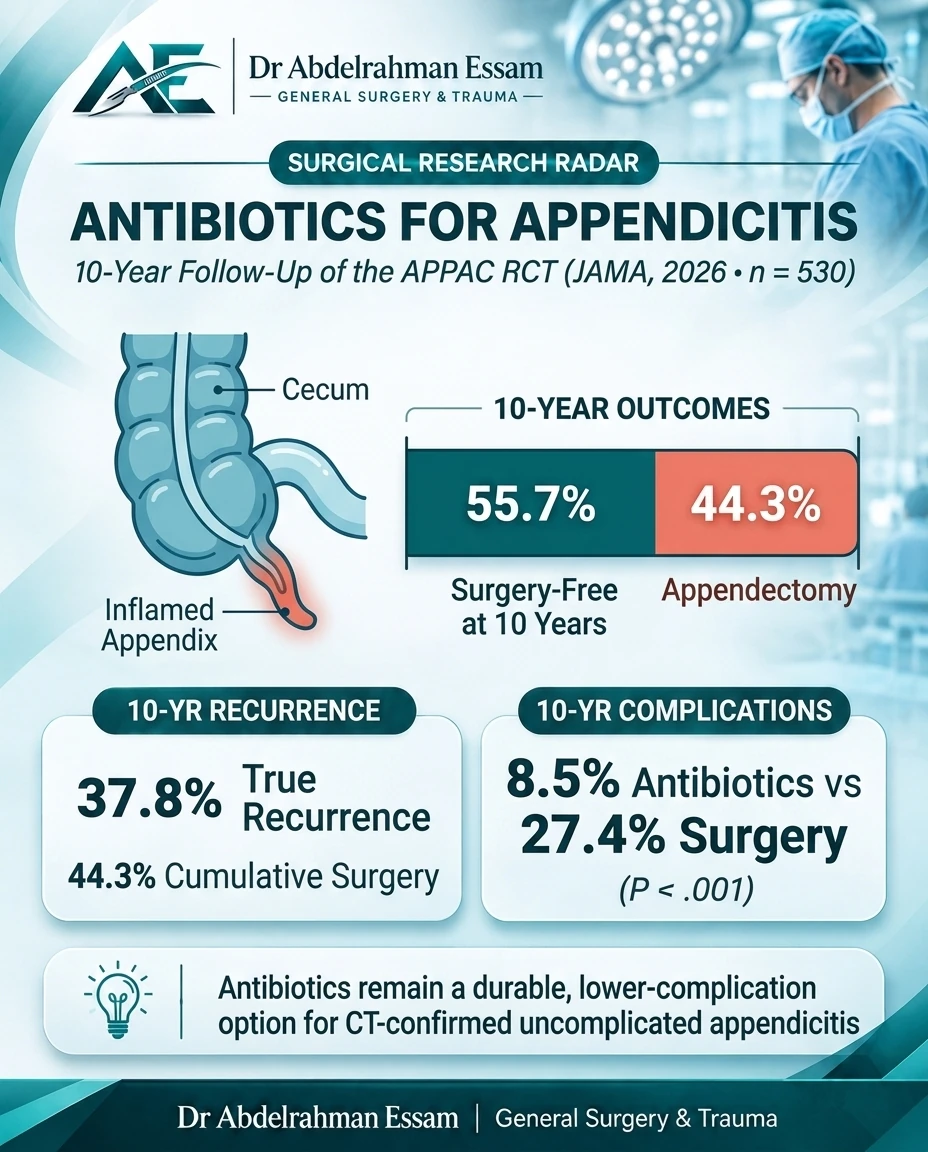
Ten-year follow-up helps put the chance of avoiding appendectomy, recurrence, and treatment trade-offs into perspective.
The clinical question
Antibiotics can allow some adults with imaging-confirmed uncomplicated appendicitis to avoid an immediate operation. The important counseling question is longer-term durability, not simply whether pain settles during the first admission.
The APPAC follow-up provides evidence for that discussion, while appendectomy remains a definitive treatment option. [1]
What was studied
APPAC originally randomized 530 adults aged 18 to 60 years with CT-confirmed uncomplicated appendicitis in six Finnish hospitals to appendectomy or antibiotics. This publication reports long-term follow-up of that randomized cohort.
It is not a new trial that randomized patients ten years later. At ten years, 253 of the 257 patients assigned to antibiotics were assessed for recurrence. [1]
Reading the numbers correctly
The cumulative appendectomy rate in the antibiotic group was 44.3% (112/253). Histologically confirmed recurrence was reported as 37.8% (87/230), using a different analysis population.
These are different outcomes and must not be used interchangeably. The ten-year cumulative complication rate was 8.5% (19/224) after assignment to antibiotics and 27.4% (62/226) after assignment to appendectomy.
No statistically significant difference in quality of life was observed. [1]
How to use this in a consultation
An antibiotics-first pathway is a choice for selected patients, not a guarantee that surgery will never be needed. Explain early treatment failure, later recurrence, access to urgent reassessment, treatment adverse effects, and the possibility of a later operation.
Selection must exclude complicated disease and consider factors such as an appendicolith, comorbidity, preferences, and local pathways. [1,2]
Limits of generalization
The study population was restricted by age and imaging criteria. The original surgical comparator and antibiotic regimen also reflect the period when enrollment occurred.
The findings should not automatically be applied to children, pregnancy, generalized peritonitis, appendiceal abscess, or every modern laparoscopic pathway. A non-significant quality-of-life difference does not prove the treatments are identical. [1]
Practical Surgical Pearls
- Separate recurrence from cumulative appendectomy when explaining the findings.
Common Pitfalls
- Calling antibiotics a permanent cure for every patient.
- Extending uncomplicated-appendicitis evidence to perforation or abscess.
Key Takeaways
- Use the ten-year results to support shared decision-making, with a clear safety-net plan.
References
Educational content for healthcare learners and professionals, not individualized medical advice. Sources checked 22 November 2026. Recommendations may change; consult the full source and current local guidance. This is an editorial evidence review, not independent clinical peer review.