
Damage-control laparotomy: let physiology set the operative plan
A practical, evidence-based surgical review
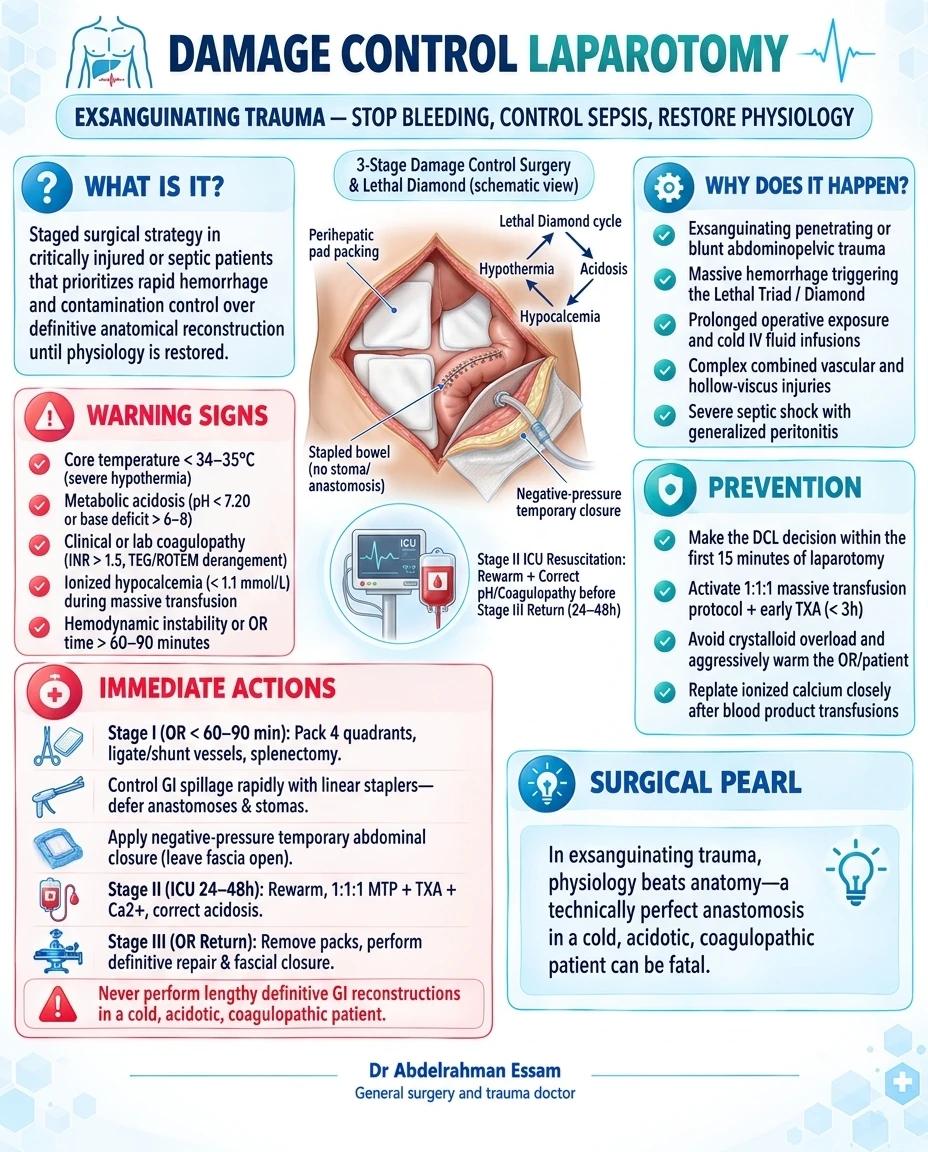
An abbreviated operation can be lifesaving in selected critically injured patients, but an open abdomen also carries substantial risk.
The purpose of damage control
Damage-control laparotomy separates immediate control of bleeding and contamination from definitive reconstruction. It is intended for selected patients whose physiology cannot tolerate a prolonged operation.
The decision is based on the overall trajectory, injuries, resuscitation needs, and operative progress, not a single laboratory threshold or a universal time limit. [1,2]
Recognize the deteriorating trajectory
Hypothermia, acidosis, coagulopathy, ongoing hemorrhage, and hypocalcemia can reinforce one another. Waiting until every element is severe defeats the purpose of an early strategy.
Conversely, an abbreviated operation is not automatically appropriate for every unstable patient; necessary hemorrhage control must still be achieved. [1,2]
The staged approach
The first operation prioritizes rapid hemorrhage control and containment of gastrointestinal contamination. Definitive reconstruction may be deferred.
Temporary abdominal closure can allow resuscitation and planned re-exploration without a dangerous tight fascial closure. Subsequent ICU care addresses perfusion, temperature, coagulation, electrolytes, and other injuries.
[1,2]
Return with a defined plan
Re-exploration is commonly planned within 24 to 48 hours, adjusted to bleeding, contamination, and physiology. Reassess bowel viability, remove packs as appropriate, complete reconstruction when safe, and pursue fascial closure as early as the clinical situation permits.
A patient who deteriorates may need earlier reassessment. [1,2]
The open abdomen is a treatment with costs
Fluid and protein losses, fistula, loss of fascial domain, and later hernia are important risks. Temporary closure needs active management rather than being treated as a neutral pause.
Avoid unnecessary duration, protect bowel, and coordinate surgery, critical care, and nutrition. The best plan balances the need for rescue against the consequences of leaving the abdomen open.
[1,2]
Practical Surgical Pearls
- Decide on damage control from the evolving physiology, before irreversible deterioration.
Common Pitfalls
- Treating a rigid 60- or 90-minute limit as more important than effective hemorrhage control.
Key Takeaways
- Abbreviate when needed, resuscitate deliberately, and return with a reconstruction and closure plan.
Educational content for healthcare learners and professionals, not individualized medical advice. Sources checked 22 November 2026. Recommendations may change; consult the full source and current local guidance. This is an editorial evidence review, not independent clinical peer review.