
Necrotizing soft-tissue infection: do not wait for late skin signs
A practical, evidence-based surgical review
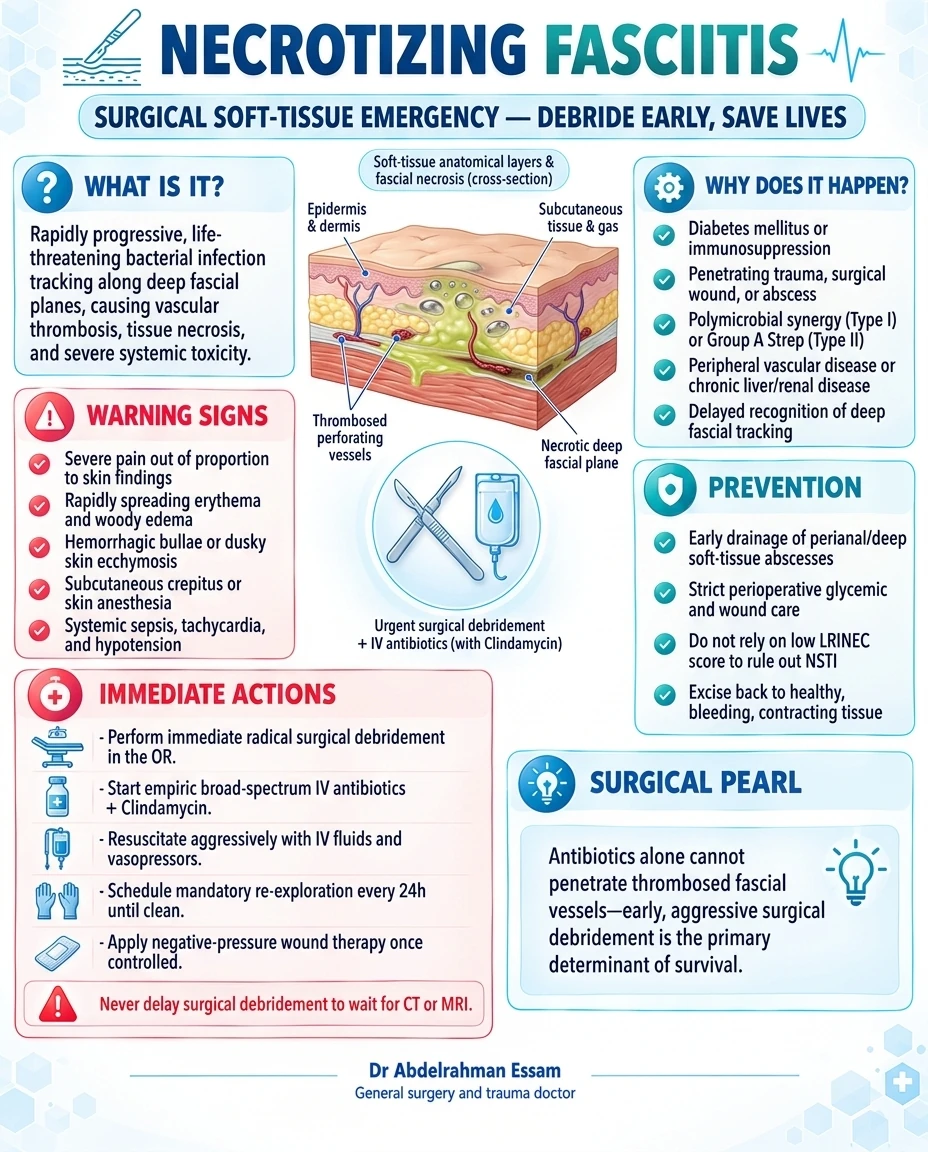
Rapid surgical assessment and source control are essential when deep infection is suspected, even before dramatic skin changes appear.
Early suspicion is clinical
Necrotizing soft-tissue infection can spread beneath skin that initially looks less abnormal than expected. Severe pain, rapid progression, systemic toxicity, or tissue edema beyond visible erythema should raise concern.
Bullae, crepitus, necrosis, or loss of sensation can be late findings. Diabetes and immunosuppression increase concern, but infection can occur without them.
[1,2]
Tests support, but do not replace, assessment
Laboratory abnormalities and imaging can help define an uncertain presentation, but a low LRINEC score does not reliably exclude the diagnosis. Imaging should not delay necessary exploration when suspicion is high or the patient is deteriorating.
Prompt surgical consultation is recommended for an aggressive infection with systemic toxicity. [1,2]
Resuscitation, antibiotics, and debridement
Treatment combines sepsis care, urgent operative removal of non-viable tissue, and broad empiric antimicrobial coverage. IDSA lists regimens covering resistant Gram-positive organisms, Gram-negative organisms, and anaerobes, then narrowing to microbiology.
For documented group A streptococcal necrotizing fasciitis, penicillin plus clindamycin is recommended. Antibiotic choice must account for local resistance and the clinical setting. [1]
Reassessment is part of source control
The first operation may not be the last. Repeat operative review and further debridement are often needed until progression has stopped and viable tissue remains.
The timing follows operative findings and the patient course; a fixed schedule must not delay re-exploration in a worsening patient. Critical care, wound care, nutrition, and later reconstruction require coordinated planning.
[1,2]
Avoid misleading simplifications
Antibiotics are necessary but cannot replace surgical source control of necrotic tissue. Equally, not every painful cellulitis is a necrotizing infection.
The task is timely recognition of risk, direct assessment, and escalation when the pattern is concerning. Keep uncertain diagnoses under active review rather than offering reassurance based only on a score.
[1,2]
Practical Surgical Pearls
- Pain and deterioration can precede striking skin changes.
Common Pitfalls
- Waiting for gas, bullae, or a high laboratory score before calling surgery.
Key Takeaways
- When suspicion is substantial, rapid assessment and adequate debridement take priority.
References
Educational content for healthcare learners and professionals, not individualized medical advice. Sources checked 22 November 2026. Recommendations may change; consult the full source and current local guidance. This is an editorial evidence review, not independent clinical peer review.