
Perforated peptic ulcer: timely diagnosis and individualized repair
A practical, evidence-based surgical review
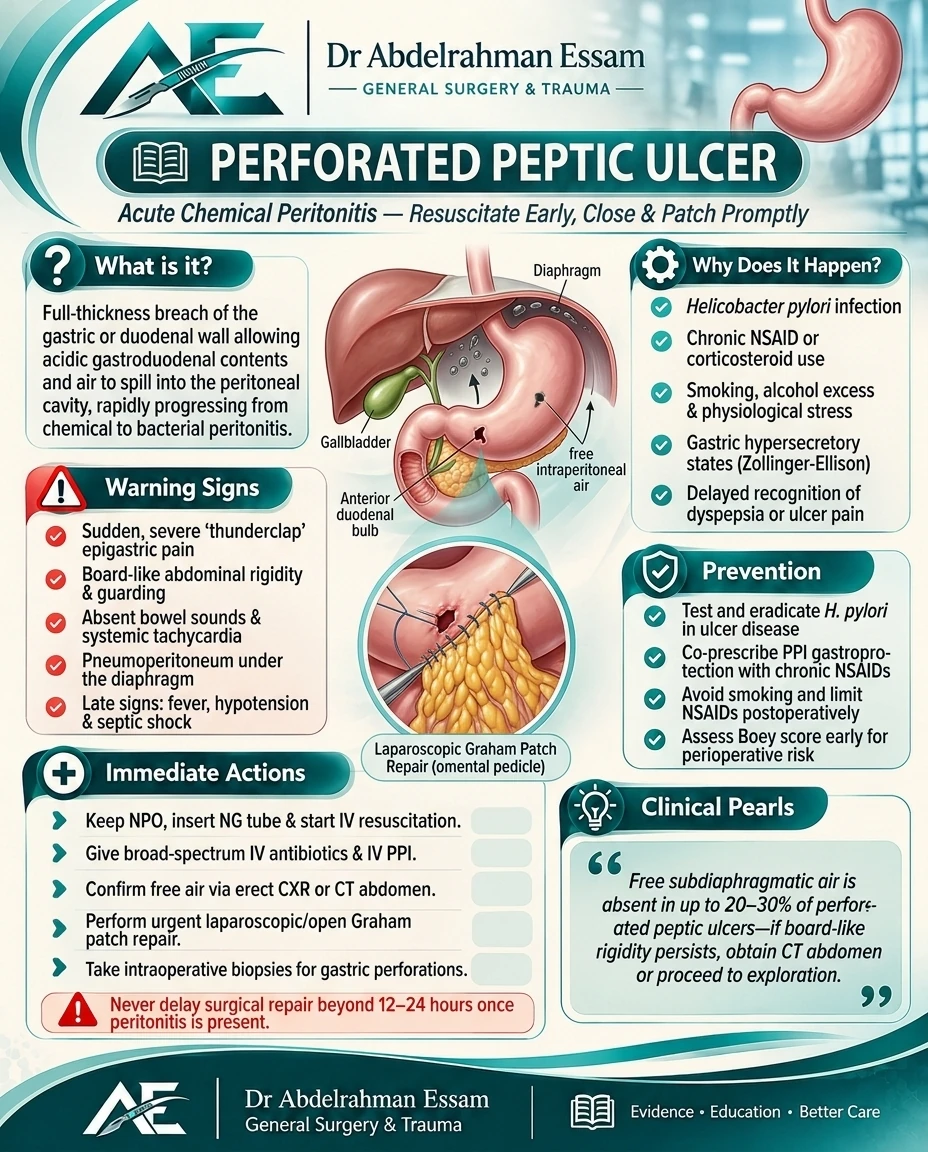
Peritonitis and physiological deterioration drive urgency. A patch is an option, not a universal solution for every perforation.
Recognize the emergency
A perforated gastric or duodenal ulcer can cause sudden severe upper abdominal pain, peritonitis, and sepsis. Older or immunosuppressed patients may have less striking findings.
NSAID exposure and Helicobacter pylori are important contributors to ulcer disease, but a compatible medication history does not replace investigation of other causes of an acute abdomen. [1]
Use imaging appropriately
CT is valuable for detecting free air, localizing the likely source, and assessing other pathology. A normal plain radiograph does not exclude perforation.
In a patient with ongoing peritonitis or deterioration, additional testing must not become a reason to defer necessary surgical assessment. The diagnostic and resuscitation pathways should proceed together. [1]
Initial care
Resuscitate according to physiology, provide analgesia, begin broad-spectrum antibiotics, and give acid suppression. Decompression and urine-output monitoring may be appropriate as part of the perioperative plan.
Risk assessment should account for shock, comorbidity, delay, and organ dysfunction rather than relying on a single score. [1]
Repair depends on the defect and the patient
Many small perforations can be closed primarily, with an omental patch used where appropriate. The operation may be laparoscopic or open according to stability, anatomy, and expertise.
Large defects, friable tissue, concern for malignancy, or severe physiological derangement may require a different strategy. Selected contained perforations may be managed without surgery only under close specialist surveillance. [1]
Treat the ulcer disease after rescue
Successful closure does not complete care. Test for and eradicate H. pylori when present, address NSAID exposure, and arrange acid suppression and follow-up.
Gastric ulcers require a plan to exclude malignancy through suitable biopsy and endoscopic assessment. The safest timing and method depend on operative conditions and the follow-up pathway. [1]
Practical Surgical Pearls
- Record the plan for H. pylori testing and gastric-ulcer follow-up before discharge.
Common Pitfalls
- Assuming every ulcer perforation needs the same patch repair.
Key Takeaways
- Control contamination promptly, then address the disease that caused the perforation.
References
Educational content for healthcare learners and professionals, not individualized medical advice. Sources checked 22 November 2026. Recommendations may change; consult the full source and current local guidance. This is an editorial evidence review, not independent clinical peer review.