
Post-thyroidectomy hematoma: recognize the airway threat early
A practical, evidence-based surgical review
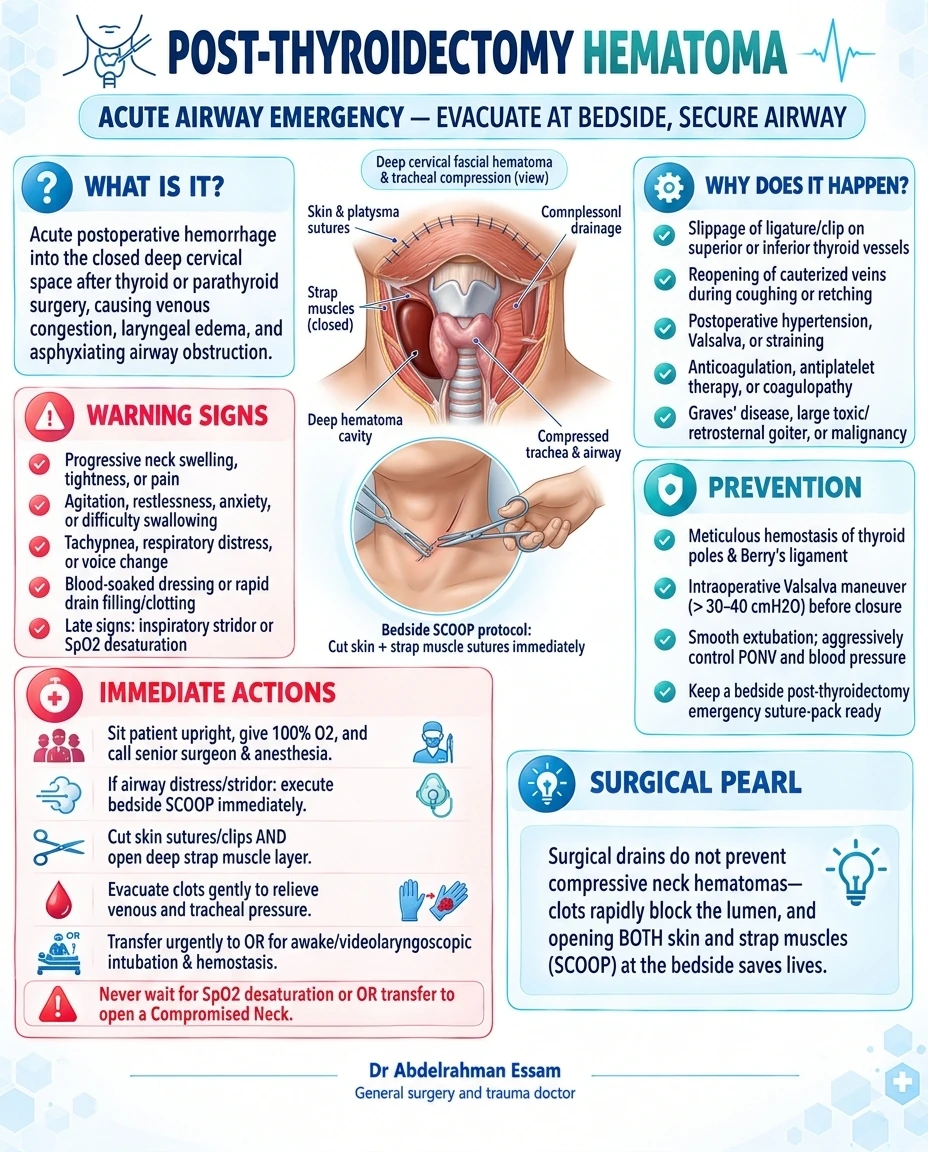
Normal oxygen saturation and a quiet drain do not exclude a dangerous neck hematoma. Teams need an explicit emergency pathway.
Recognize more than visible swelling
After thyroid surgery, neck bleeding can threaten the airway through compression and edema. Difficulty swallowing, discomfort, swelling, anxiety, tachypnea, voice change, or stridor should prompt urgent assessment.
A normal oxygen saturation is not sufficient reassurance. The DESATS warning framework in the multidisciplinary guideline helps teams recognize deterioration before collapse. [1]
Call for skilled help immediately
Urgent senior surgical and anesthetic support, oxygenation, close assessment, and preparation for airway management are needed when a hematoma is suspected. A stable patient with concern for bleeding still needs a deliberate escalation and monitoring plan.
Airway compromise or rapid deterioration changes this into a time-critical emergency. [1]
The emergency decompression principle
The guideline recommends the SCOOP approach for hematoma with airway compromise: skin exposure, cut sutures, open skin, open superficial and deep muscle layers, and pack the wound. Emergency bedside wound opening is intended for trained teams following their institutional pathway.
It must not be delayed simply to transfer a deteriorating patient to theatre. This article is not a substitute for supervised emergency training. [1]
Airway rescue and definitive care
Decompression and airway management must be coordinated. Difficult-airway equipment and a plan for emergency front-of-neck access must be available.
Failure to improve requires rapid reassessment and airway escalation, followed by definitive surgical hemostasis. The airway approach is determined by the clinical situation and experienced clinicians, not by a mandatory awake-intubation sequence. [1]
Prepare the system, not only the surgeon
The guideline supports a post-thyroid surgery emergency box and team training. Drains do not prevent all hematomas and can be blocked by clot, producing false reassurance.
Clear bedside observations, escalation criteria, equipment access, and communication during transfer are part of prevention of delayed rescue. [1]
Practical Surgical Pearls
- A quiet drain and preserved saturation can coexist with a developing airway emergency.
Common Pitfalls
- Waiting for desaturation before calling for help.
Key Takeaways
- Recognize early, summon the team, and follow a rehearsed decompression and airway pathway.
Educational content for healthcare learners and professionals, not individualized medical advice. Sources checked 22 November 2026. Recommendations may change; consult the full source and current local guidance. This is an editorial evidence review, not independent clinical peer review.