
Splenic trauma: physiology first, preservation when safe
A practical, evidence-based surgical review
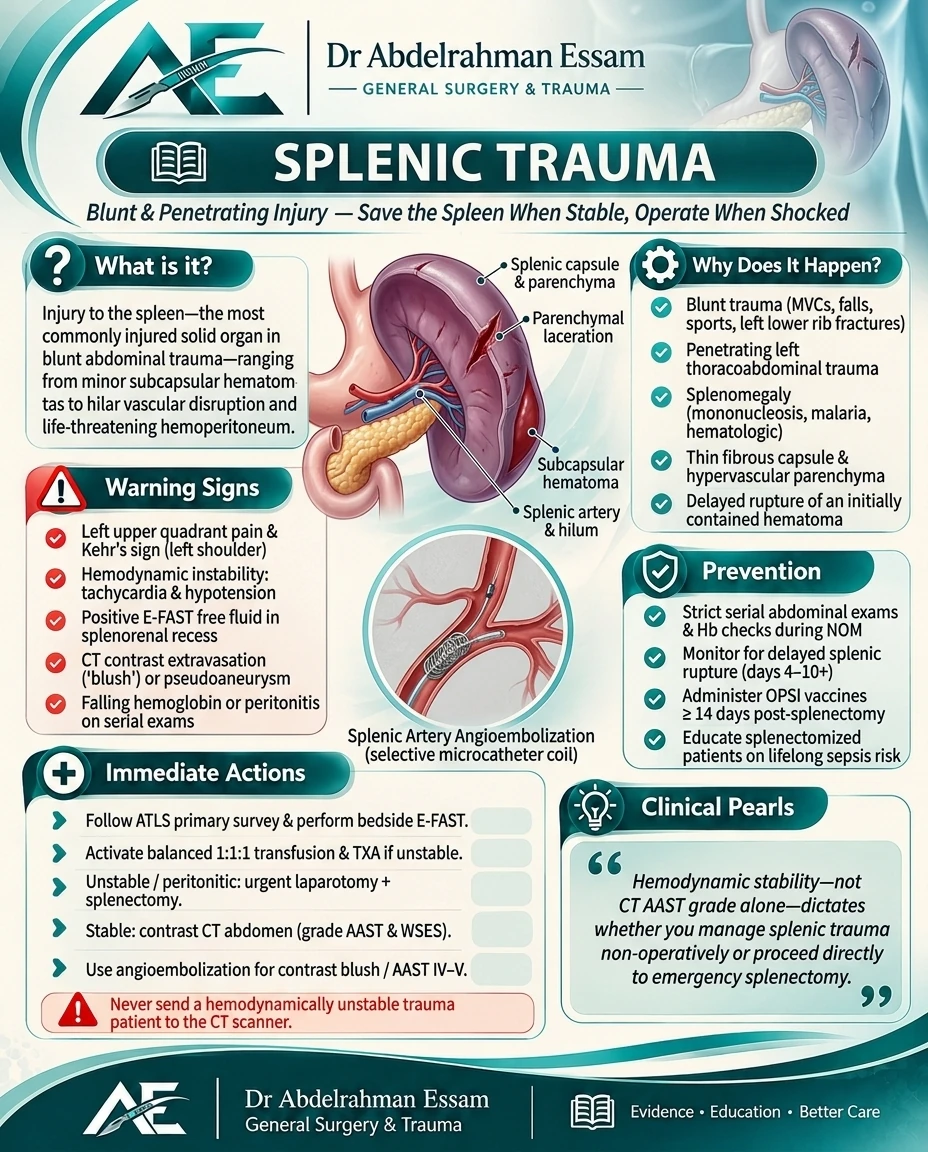
Injury grade informs the plan, but hemodynamic response, associated injuries, and local rescue capability determine what is safe.
Start with the whole trauma patient
Splenic injury can cause major intra-abdominal hemorrhage. Assessment follows the trauma resuscitation pathway, including evaluation for other sources of bleeding.
Hemoglobin early after injury may not reflect the full blood loss. Bedside ultrasound can detect free fluid but does not fully characterize splenic anatomy or exclude injury when negative.
[1,2]
When an operation is needed
Persistent hemodynamic instability, peritonitis, or another injury requiring laparotomy may necessitate operative management. An unstable patient should not have essential hemorrhage control delayed for routine CT.
In severe bleeding, prolonged attempts at splenic preservation may be unsafe. Decisions depend on response to resuscitation and the complete injury pattern.
[1,2]
Nonoperative management is an active pathway
Stable patients can undergo contrast-enhanced CT and may be candidates for observation with or without splenic artery embolization. Grade, vascular blush or pseudoaneurysm, ongoing blood requirements, and other risk factors inform treatment.
Higher grade does not automatically mandate splenectomy, but observation requires monitoring and immediate access to rescue intervention. [1,2]
Watch for delayed problems
Serial examination and appropriate laboratory and imaging follow-up are needed. Delayed hemorrhage or vascular complications can occur after the initial injury, including beyond a simple ten-day window.
Discharge advice must explain warning symptoms and the activity and review plan. The appropriate schedule depends on injury severity and the treating trauma service. [1]
After splenectomy
Loss of splenic function requires an infection-prevention plan, including vaccinations, education about fever, and locally appropriate prophylaxis advice. Vaccine timing and products should follow current national guidance and the patient situation.
Splenic artery embolization does not automatically mean functional asplenia or an identical vaccination requirement. [1]
Practical Surgical Pearls
- A nonoperative plan is only as safe as its surveillance and rescue capability.
Common Pitfalls
- Letting CT grade replace assessment of perfusion and response to resuscitation.
Key Takeaways
- Preserve the spleen when safe, but never at the expense of timely hemorrhage control.
References
Educational content for healthcare learners and professionals, not individualized medical advice. Sources checked 22 November 2026. Recommendations may change; consult the full source and current local guidance. This is an editorial evidence review, not independent clinical peer review.