
Tension pneumothorax: recognize physiology and decompress without delay
A practical, evidence-based surgical review
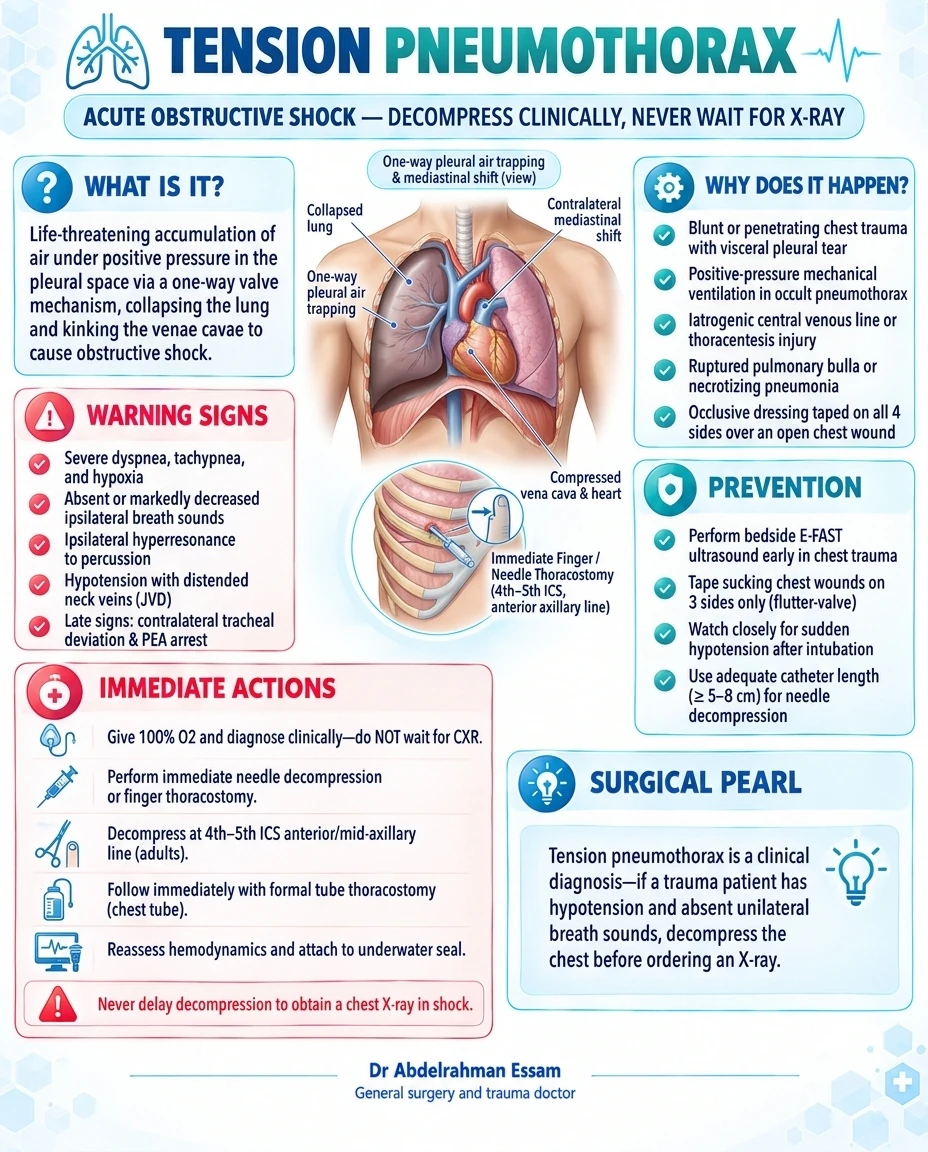
In a deteriorating patient, treatment is guided by the clinical emergency rather than waiting for a radiograph.
What makes it tension
A pneumothorax becomes a physiological emergency when accumulating pleural air compromises ventilation and venous return. Deterioration can be particularly rapid during positive-pressure ventilation.
Chest trauma, lung disease, and procedures are possible causes. The diagnosis concerns the clinical effect, not simply the size of a lucent area on imaging. [1]
Recognize a changing patient
Acute respiratory distress, hypoxemia, unilateral reduction in breath sounds, rising airway pressures, and circulatory deterioration are concerning. Distended neck veins may be absent with concurrent blood loss, and tracheal deviation is not required.
In an intubated patient, tube displacement, obstruction, equipment failure, and other causes of sudden deterioration must also be assessed promptly. [1]
Do not wait for confirmatory imaging in shock
When the clinical picture suggests tension physiology in an unstable patient, immediate decompression is needed. Bedside ultrasound may support a rapid assessment when immediately available, but it must not postpone treatment.
A stable patient with diagnostic uncertainty is a different setting in which imaging can guide care. [1]
Emergency treatment and definitive drainage
Needle decompression or surgical thoracostomy may be used by trained clinicians according to setting, skills, and local trauma protocols. Needle length, insertion site, body habitus, and catheter failure matter.
Definitive pleural drainage and reassessment are required; an initial needle is not a guarantee that tension cannot recur. The conceptual illustration is not a procedural map.
[1,2]
Reassess the response
Check oxygenation, circulation, ventilation, and the function and position of the drainage system. Failure to improve requires renewed assessment for ineffective decompression, another chest injury, hemorrhage, tamponade, or another cause.
Equipment and a practiced team response are as important as recognition of the textbook pattern. [1]
Practical Surgical Pearls
- A sudden rise in airway pressure with shock after chest trauma demands immediate assessment.
Common Pitfalls
- Waiting for tracheal deviation or a chest film in a crashing patient.
Key Takeaways
- Treat tension physiology promptly and verify that drainage is effective.
References
Educational content for healthcare learners and professionals, not individualized medical advice. Sources checked 22 November 2026. Recommendations may change; consult the full source and current local guidance. This is an editorial evidence review, not independent clinical peer review.